Esophagogastroduodenoscopy (Gastroscopy)
Definition
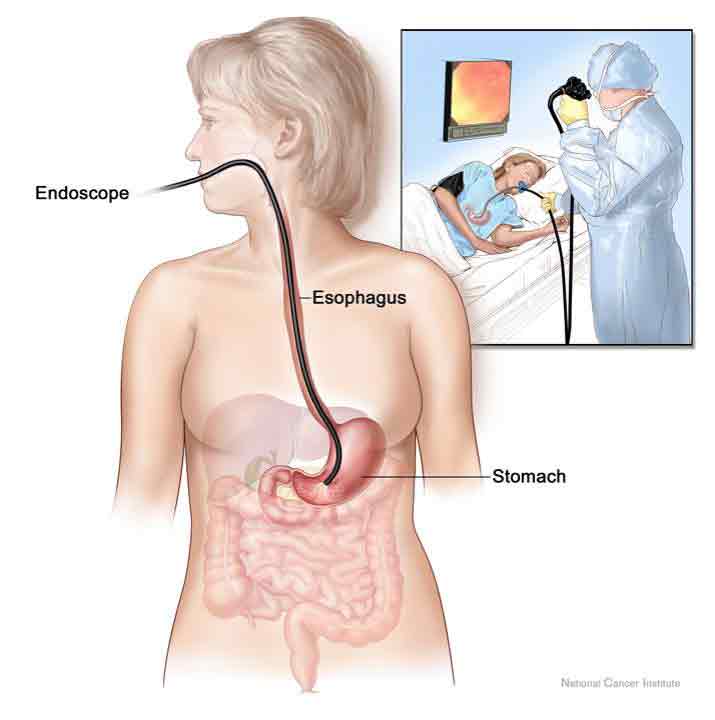
An esophagogastroduodenoscopy (EGD), sometimes referred to as a gastroscopy or upper endoscopy, is a procedure to visualize the upper digestive tract. This includes the esophagus, the stomach and the first part of the small intestine (called the duodenum). The procedure is performed by advancing a long thin endoscope into the mouth and advancing it into the stomach. The endoscope has a camera lens and light source and is used to produce images of your digestive organs on a video monitor. The procedure lasts approximately 10 to 45 minutes. You will spend another 30-60 minutes recovering from the sedation given for the procedure.
Procedure
When you arrive at the scoping department, you will meet a nurse who will briefly review your medical history. You will change into a hospital gown and have your vital signs measured. You will have an intravenous (IV) line placed in your arm. This IV line will be used to provide your sedating drugs (midazolam and fentanyl) when your procedure is started. A local anesthetic (“freezing”) spray to the back of the throat may also be given to provide further comfort. You will be taken on a stretcher to the procedure room and you will be met by your doctor and the nurses. You will be given oxygen, and your blood pressure, heart rate and breathing will be monitored throughout the entire procedure. Please express any of your concerns to the nurse or doctor before your procedure. Also, there may be medical students, nursing students or resident physicians present and/or participating in your procedure.
Preparation
You must have an empty stomach (so nothing to eat or drink) for at least 6 hours before the procedure. If you get very thirsty, you can have small sips of water for comfort, but do not take anything else.
Medications:
If you are on blood thinning medications/anticoagulants (such as Plavix, warfarin, dabigatran, rivaroxaban, apixaban, edoxaban etc.), please notify the office of the doctor who is performing your procedure. They will give you specific instructions on whether or not you should stop your blood thinner before the procedure.
If you are diabetic on insulin or oral diabetic medications, hold your doses prior to the procedure on that day. Do not hesitate to call your doctor’s office for more information if you have questions.
Do not interrupt any of your medications during your preparation for this test. You can take your medication with sips of clear fluids.
Other Preparation Instructions:
Please bring a list of your medications with you to the hospital. Please do not wear nail polish on your fingernails or any jewelry to your test. Please do not bring valuables.
Risks
Complications are rare. Minor complications, which include medication reactions or difficulty breathing due to the sedatives, temporary bleeding, abdominal pain, discomfort, or bloating, occur in about 1:100 (1%). Major complications, such as perforation or a hole being made in the stomach or upper intestine, are rare and occur in less than 1:1000 (0.1%), and surgery and/or hospitalization may be required to manage it.
Post Procedure
Your doctor will provide you with a note regarding the test outcome, as well as some post procedural information. Any biopsies that are removed will be reviewed by the pathologist and results are available within a month. The biopsy results will be given to you by the endoscopy doctor or referring doctor either by phone or at a follow-up appointment and if necessary, further treatment plans will be discussed.
Going Home
If you have sedation with your procedure:
After the procedure, a person spends about 30-60 minutes waking up in the recovery room until the medications wear off. After recovery, you will be discharged from hospital. It is advised that you do not drive for the next 24 hours, and should be discharged to the care of a responsible adult, who will escort you home. You must make arrangements to be accompanied overnight the day of the procedure, if deemed necessary by the physician.
If you have no sedation with your procedure:
You can go home or back to work immediately post procedure. You do not need any supervision and are able to drive yourself.